
“Do you want me to turn this into an article ready to publish in a newspaper?” A shout-out to Matteo Flora, whom I recommend you follow, who tells us about this hapless journalist who copy-pasted an article straight from ChatGPT that then went to press on the fast track, with no review, not his own and not anyone else’s. Hilarious. But this is just one of many cases we are seeing of the “AI plus copy-paste” phenomenon.
Stop asking me for the use case
I want to take the chance to send a message to the whole world of technicians, entrepreneurs and investors who are wondering where to put artificial intelligence, that is, what the actual use case is. Here I even get a little irritable, because the next person who walks up to me and asks “what is the use case?” is getting a smack on the head. The use cases are everywhere. It is you who sees them, once you start turning your brain a little. You do not need someone to hand you a list of use cases, because if someone hands you a list, it is already too late.
Why copy-paste should not exist
Now to what I actually wanted to say. This journalist should not be copy-pasting and then emailing around something medieval. Even lawyers exchange contracts by email. Will you please wake up? The journalist copies, pastes and sends to someone. This should simply not exist, because there are two possible roads I want you to imagine, and both are already happening.
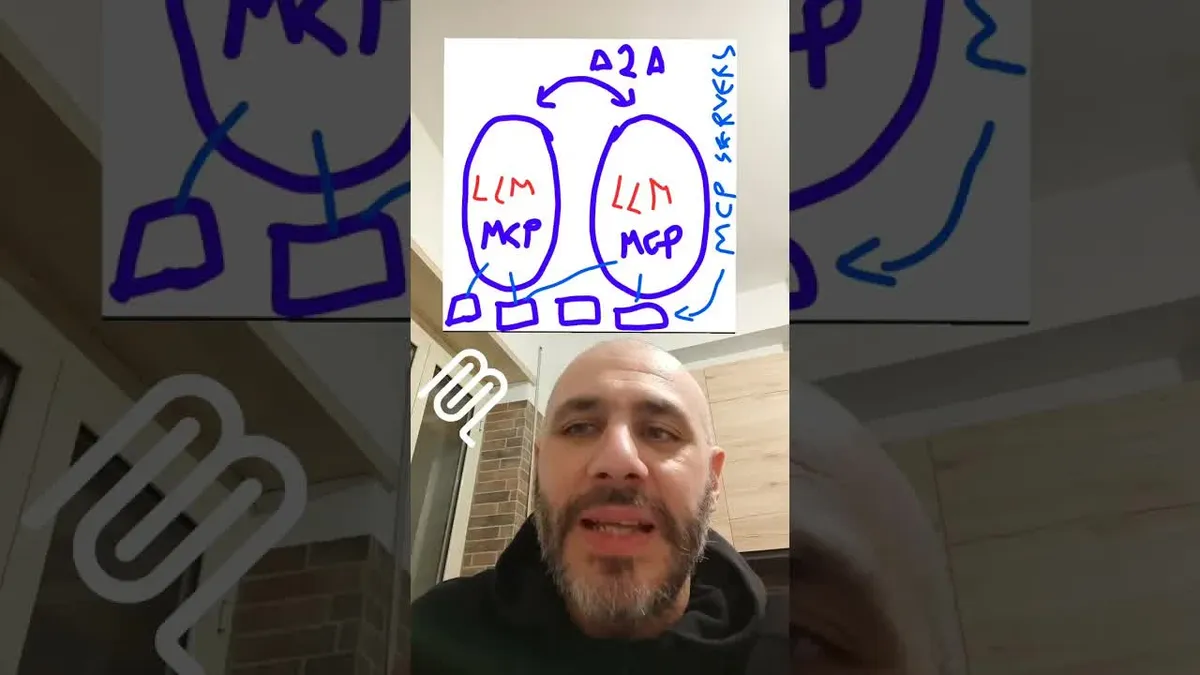
The first: inside ChatGPT there is an installed app, or a connector, or an MCP server, because that is exactly what we are talking about. And this connector, when the journalist says “go, send it to the newsroom for publication,” does it directly from there. No copy-paste. It is the agent, the app sitting in there, that does the work of sending what needs sending to whoever needs it. Not only that: it can also fire off automatic review prompts to strip out all the traces left by the language model, do the grammar corrections, a whole series of automations. It can even pop up a little widget: “look, I am about to send this article directly to so-and-so, do you confirm?” Confirmed. Right there, inside.
The platform dream, and the open alternative
This is the vision of apps, connectors and MCP servers, and it is a way for OpenAI and the others to become a platform. Their dream is that we plug our own services into their platform, so that when the money starts moving, it all moves through them and they take a slice of everything. That is the whole point of apps inside ChatGPT, of connectors, of MCP servers: becoming the platform, building the fence.
Fortunately, though, underneath it all there are open protocols. Which means you can perfectly well build your own version of ChatGPT, maybe to run inside your company, and this version too, which you can wire up to ChatGPT, to Claude, to local models, talks to third-party applications, including the one that manages the newsroom’s articles. Or, even easier to start with: if you manage the newspaper’s articles on a WordPress, a Drupal, a Django, put the little chat directly in there. In all these cases it has to be the agent that sends things where they belong, offering human review by design and doing automatic corrections by design. And these are the agents.
Doing this directly inside ChatGPT is OpenAI’s wet dream. They want to become a platform, they want to fence everything in. I do not know if they will pull it off, because with hardware, with phones, you can fence things in far more easily than with software and the open web, but there I go off on a long tangent, they might manage it, or they might not. Their third attempt is plugins, connectors, apps. That is one scenario. The second scenario: you have your own AI application with your fleet of agents in-house. The third scenario: you drop the little chat with the agent straight into the apps you already use.
For scenario two or three you can happily use the Cheshire Cat, it is built for exactly this. Version 2 will even let you add proper apps, meaning you can have your own internal installation of the Cheshire Cat and connect third-party applications to it. So you make it talk to the invoicing system, to the newsroom, to email, and it knows people’s roles and sends things to the right people. This stuff can be done.
If you are not seeing the use cases for artificial intelligence, and you look at current events like the journalist doing copy-paste as just a simple meme, well, they put the answer right in your face: this is what the use case looks like. The video was a bit longer, because I had also done the whole sketch of how you build this technically. I have decided to stay a little more on the surface from now on, because too many people are copying me and it is starting to get on my nerves. So if you want concrete help doing these things, get in touch. I do training too.