
Welcome to the third episode of this morning podcast with Savastano. We talk about artificial intelligence, and today the reflection I want to offer you is about coordination.
With artificial intelligence, many of us are used to framing it as a form of automation - and we’re right, because in large part it can be identified with that word. The last two big technologies we saw, the ones that changed everything, were the internet and then the web, which are revolutions in the field of communication: making people, machines and organizations talk to each other on a global scale. And you can look at this AI thing as a revolution in automation - the things that can be done automatically, taking away from people the obligation to do certain things, or helping them do them faster, or partially. Either way, machines doing things.
From automation to coordination
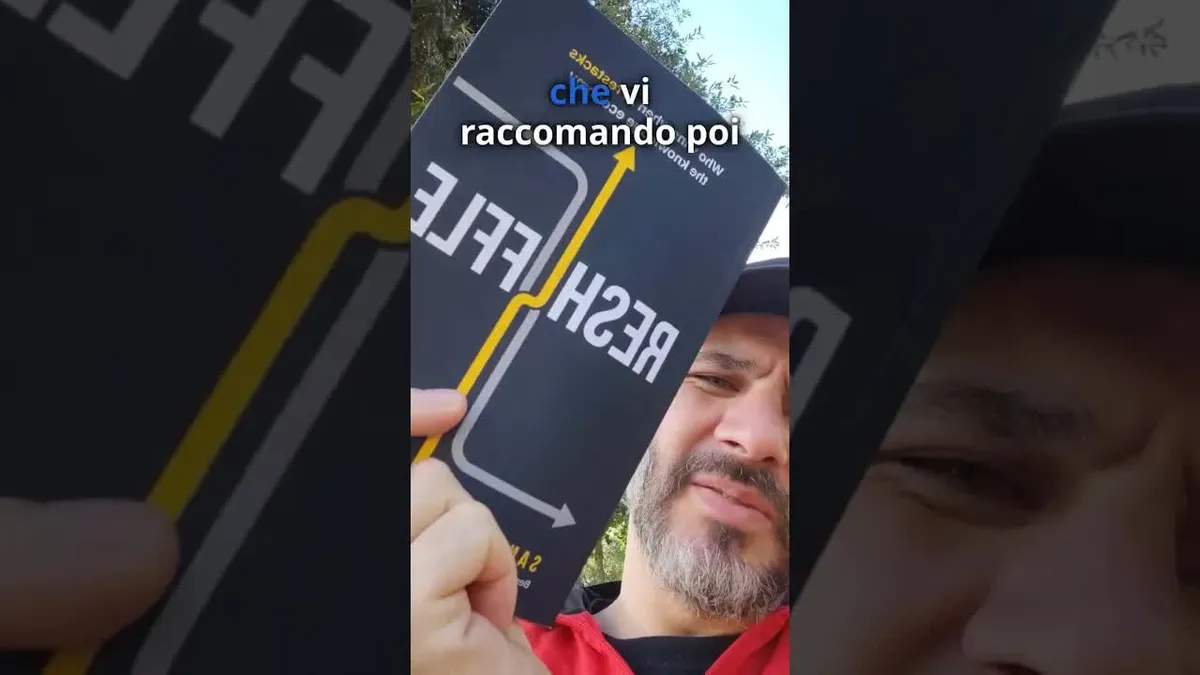
I’m reading a book I recommend - later I’ll do a nice video with all the books I’m reading. There are some very good ones made by Italians too. No spoilers, but maybe I’ll do a video just for that. Anyway, this book is called Reshuffle, and it makes an argument that struck me, something I’d never framed clearly.
He says: let’s stop looking at artificial intelligence in terms of automation and look at it as a form of coordination - which is a slightly higher-level idea. He says AI, more than removing activities, makes it possible to align people and organizations in doing things, where before you had to align manually, communicating explicitly, or by establishing exhausting standards over time.
He says AI is a good way to get past the impasse that sits between organized work that already exists and is oriented toward getting things done, but isn’t yet standardized - and is therefore a mess. See bureaucracy. See information duplicated across a thousand databases, in a thousand places, even inside people’s heads. See the two thousand headaches involved simply in getting a few people to agree on doing something. And he sees, right there, a fundamental role for artificial intelligence as a form of coordination.
The pizza example
Let me give an example and then I’ll leave the floor to you. Imagine we’re a group of friends and we have to go eat pizza. We’ve decided to go eat pizza together, so we say “all right, let’s go for pizza.” And when do we all go, happily, to eat this pizza? Anyone who knows - from about age 30 onward it becomes impossible to organize these things. Because I’ve got five-a-side football, I’ve got my kid, I have to do this, I have to do that. Nobody, even if they want to meet up, actually has the time.
In reality everyone has the time, but that time is misaligned. You have to sit there and talk: okay, when are you free, when are you free, and then where do we go? Are there allergies? Then someone shows up who doesn’t want to go to a certain place because their ex used to be there, or they’re allergic to flour, so you have to find another spot. These are problems of alignment and coordination.
And in fact, if you think about it - if I spin up a bot, maybe on WhatsApp (this is a nice idea for a little product), you can help people organize events by having the bot talk to each person individually. The bot goes around and asks everyone: okay, when are you free, pizza yes or no? Or it looks directly at the calendars, collects the intolerances and various constraints, knows where the venues are, and can even make the booking.
Is there a form of automation there? Absolutely yes. What it’s automating is the goodwill of the friend who sacrifices themselves every single time. That friend who really wants to make this thing happen, who ends up bickering with people one by one - when are you free, what do you need, where are we going? It’s automating the coordinator, so it still falls within automation. But actually looking at AI directly as coordination can unlock some things.
Let me know what you think. See you at the next episode.