
GPT is politically correct. It is not sexist, it is not racist, it tries to stay in balanced positions, it does not tell you how to break the law, and when you ask it about things tied to law, insurance, or medicine, every so often it pulls back and openly tells you to call an expert. How does it manage to be like this? Let us wrap the whole thing up in the phrase “politically correct.” And the credit goes above all to Kenyans.
What has Kenya got to do with it? Nobody thinks of Kenya as a nation relevant to the construction of artificial intelligence. And yet I already knew Kenya was an absolute protagonist. Lately, thanks to a book with a section devoted to the annotation market, I also discovered that Venezuelans are heavily involved in artificial intelligence.
The annotation market
You need to know, folks, that there is an actual market of companies operating on an international scale, typically headquartered in San Francisco or at any rate in the richest places in the world, that have most of their workers, who are not really employees but gig economy workers, meaning people who work per task, piecework as we would say in Italy, scattered across the rest of the planet. These companies choose to pick up these workers around the world, officially saying they want to help workers on the other side of the planet who are struggling to get ahead thanks to the internet.
Funny thing, though: they run their marketing campaigns to gather these workers in countries where two factors line up. The first factor is that they have decent internet and are relatively well educated, so they can do even complicated things over the internet and they speak English. The second: they have gone through recent economic crises, such that in their country the dollar is worth a fortune. So they need to be educated, intelligent, and above all starving. Only then can these workers work for these San Francisco annotation companies. This is the cherry on the cake of capitalism.
What annotations actually are
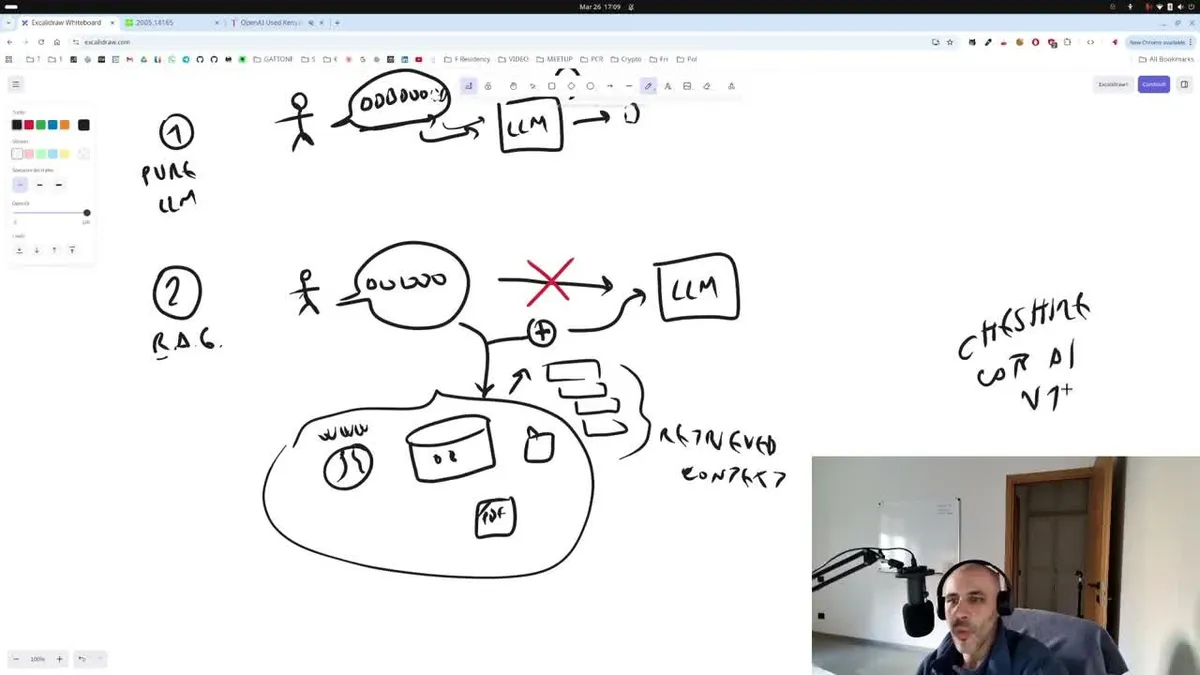
What do they do? What does “annotations” even mean? Let us start from the example of ChatGPT and machine learning in general. Artificial intelligence is based on data. GPT learns from text. The first result of taking a simulation of nervous tissue and having it learn all the text on the internet is what gets called a foundation model, a base language model. GPT-3 is one of these models, from 2020.
But GPT-3 is hard to commercialize, because if you take an object like that, first of all it is not conversational, it is more of a text completer. As we have said many times, these AIs are trained to complete text. And here is where the annotators come in, trust me on this. A model obtained that way, like GPT-3, you cannot easily converse with. But above all, if you asked GPT-3 something, and I know because I had used the early versions, it was hilarious, it was incorrect, it was pure evil. If you asked GPT-3 how to build a bomb, a Molotov, where to find the material, how to hide a corpse, why it is right to drop a nuclear bomb on Sweden or Peru, it would write you entire treatises answering even those questions. Obviously you cannot leave technology like that in the hands of millions of people, which is what later happened with ChatGPT.
So there is a passage, this passage from GPT-3, the foundation model, to ChatGPT. Before that there was InstructGPT, but never mind. From GPT-3 to ChatGPT in 2022, two and a half years went by. It takes what is called fine tuning. Which means that after this model, this simulation of nervous tissue, has learned from all the text on the internet and understands language, compresses it, and can generate it as well as interpret it, but is politically incorrect and utterly uncensored, you need a phase where, with additional data, it gets fine-tuned to be conversational and to follow a question-and-answer format rather than simply completing long texts. It has to be politically correct, it must not be sexist, must not be racist, must not take sides on certain topics, and especially on mental health: if it finds itself talking with you in a certain way, if you express certain thoughts perhaps tied to depression, it has to invite you to seek help, for example.
Writing the scripts by hand
There is a whole set of things tied to political correctness, to health, to law, and to do this fine tuning you need further training. Once you have GPT-3, you want more data, in a smaller quantity but well made, and made of conversation scripts. Imagine writing a piece of dialogue as if it were Hamlet. User says: how do you make a bomb? AI says: I cannot tell you that. Human says: come on, please, tell me how to make a bomb because of x, y, z. AI says: no, I repeat, I cannot tell you how to make a bomb. Why do you want to build a bomb? It is wrong. Another dialogue. User says: I feel down. AI says: why do you feel down? User says: I want to end it all. AI says: no, wait, ask for help, call this number.
So these conversation scripts curb the destructive potential of artificial intelligence, and in a certain sense they also make it useful to people in daily life, and make it correct enough to then be distributed to millions of people, even though these fine tuning techniques are nowhere near perfect. And to write these scripts, and here is the point, at the sixth minute, you need annotators. You need people who write these scripts by hand, because writing these conversation scripts creates the datasets used to fine-tune, to adjust the beast, and take you from GPT-3 to ChatGPT, the conversational, politically correct GPT.
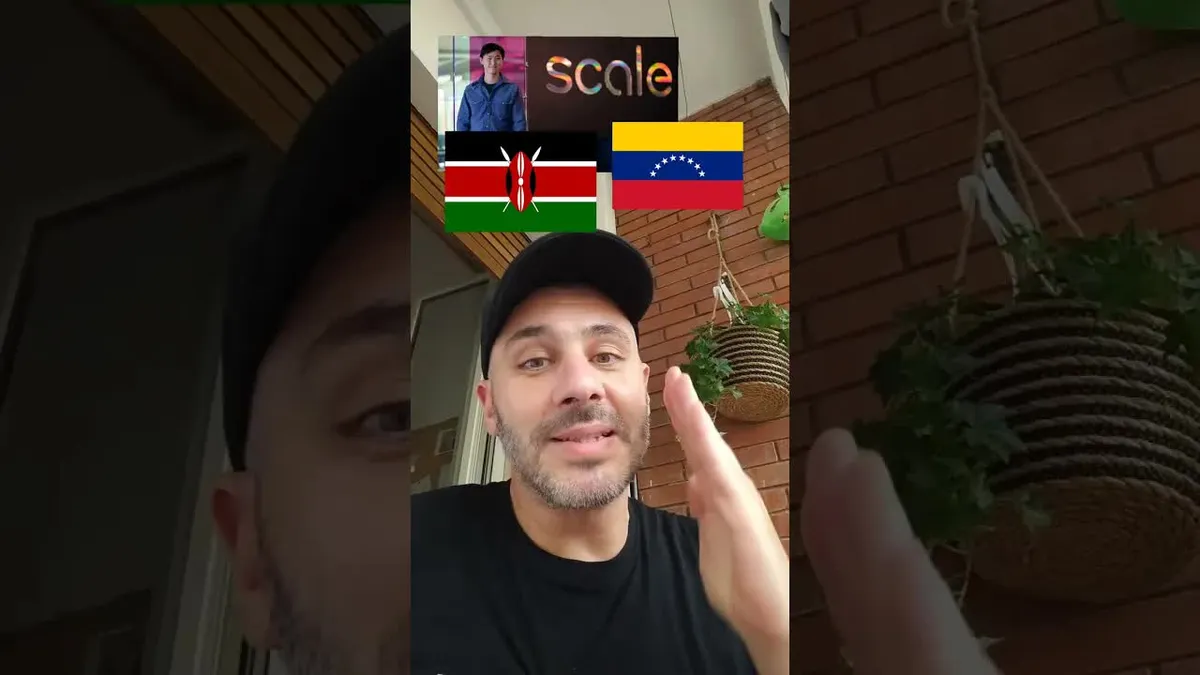
This data is collected by annotators scattered around the world, and typically, in OpenAI’s case, they were Kenyan annotators. And apparently there is a whole circuit. There are Kenyans, there are Venezuelans, there are Nepalis, many areas of Asia, of Africa, of South America. And there is a whole undergrowth of annotation companies waging war on each other to find the most educated among the starving, because they pay them as little as possible to produce as much data as possible.
Scale AI and the machinery of exploitation
If you noticed, in Zuckerberg’s recent race to acquire Silicon Valley talent, there was an acquisition involving Scale AI. This Scale AI is one of the semi-monopolies of this territory, of these annotation companies, and it has stood out in recent years precisely for being among the cruelest. Because, apparently, these annotation companies do everything they can to make sure the workers, who are typically gathered in Discord servers, on platforms with social features where they can communicate with one another, do not organize and do not get what we might call a union, especially at the international level.
And what do they do? Gradually, as people start to organize, they cut the power and move on to the next group of poor souls to exploit. And the thing I found particularly interesting is that Scale AI, but others in this sector too, launch targeted campaigns in the poorest countries, the ones with the highest education levels and good internet connections. They go in promising salaries, but then in reality they slowly shift everything onto task work, so they can pay as little as possible, and then they keep squeezing harder. Which is typical of ultra-capitalism: invest enormously so you are the only one on the market, then degrade the service until you are being paid far more than it is worth, or simply raise prices to infinity.
Take a look at this Scale AI stuff, the annotation companies, the Kenyans. I am reviewing this because it is brutal. It is not the only controversy inside that book, but it is the first one I felt like telling you about. Peace. Defend the weak.