
Wanna Marchi was right when she said that idiots are there to be swindled, and you can see it clearly right now with artificial intelligence. In this stretch of history there are so many salespeople and self-appointed experts wandering around saying “AI does this now,” “from now on AI makes that happen,” “AI is dangerous because of this other thing.” They work a cocktail of emotions that runs from the great pleasure of doing nothing at all to the immense fear of never being able to work again, and they conveniently forget everything in between. Reality, luckily, is far more sophisticated and nuanced than that.
AI is not a light switch
So what can artificial intelligence do? A lot of things. Can it do everything? No. Does it fully automate? No. Does it not automate at all? It does not even not-automate. Every system that puts AI tools in the hands of third parties is designed and engineered on purpose, keeping the risks in mind.
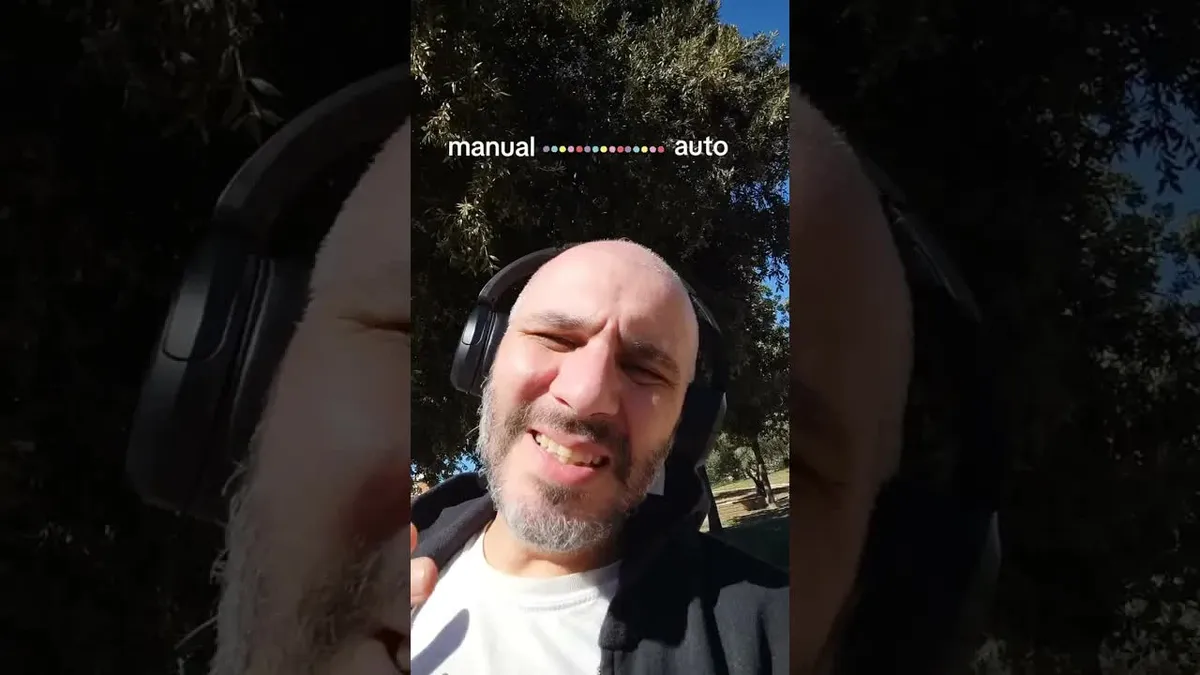
Picture a continuous line that runs from completely by hand to completely automatic. It is a continuous line. It is not that you either do everything by hand or everything on autopilot. If it were that binary, then Wanna Marchi really would be right. There is a point somewhere in the middle of that line.
How you find the point in the middle
How do you find that point? You find it by doing a risk assessment. The more responsible and the more risky the activity, the more you need the so-called human in the loop: the AI proposes, prepares and automates part of the work, but then leaves the review and the final decision to a human operator. In low-risk contexts you can automate completely. How do I decide? By analyzing the risk, the responsibility, the type of automation. Professional AI systems, the serious ones, are built precisely to account for this gradient from the very beginning.
So the next time the classic sales guy walks up to you, especially the ones from the multinationals, and tries to squeeze tens of thousands of euros out of you by telling you that AI now does this, does that, does everything, does it all, while conveniently forgetting to mention your share of the work, which will still be there and which is mostly about understanding what to automate, what not to, how much, and in what way, you send him packing on the fast track.
I am actually putting together some schemes to reason about all this the easy way, with post-its and sketches on a little whiteboard. I am offering them in my corporate courses. If you want to learn, or you want your people to learn, get in touch.